India
Mumbai & Ulhasnagar
The largest concentration of Sindhi Hindus, where the community first rebuilt after Partition.
In the half-century after Partition, Sindhis built one of the most globally distributed trading networks in human history. Not by conquest, not by colony — but by trust, family, and an extraordinary tolerance for the unfamiliar.
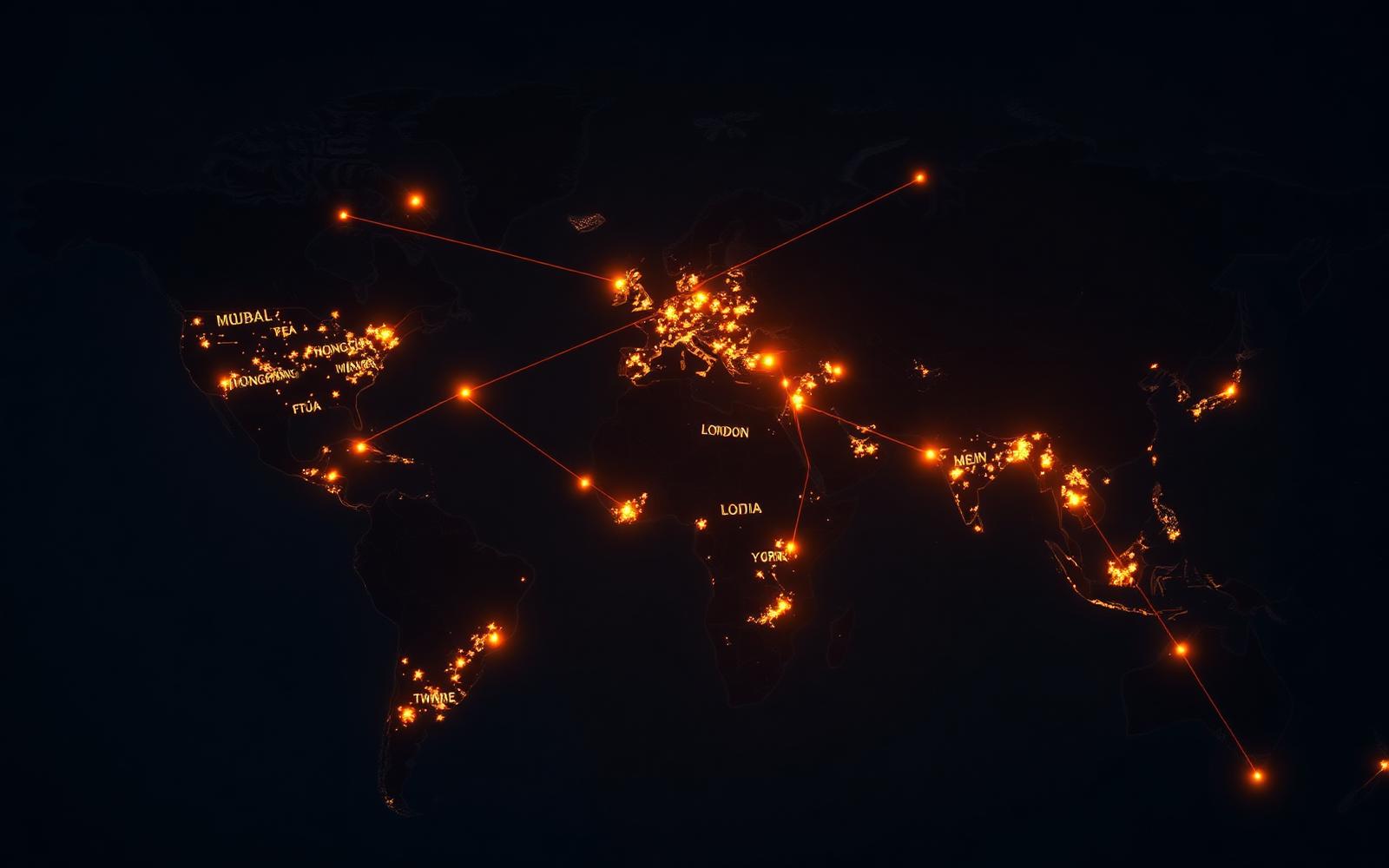
Sindhi merchants — known as Sindworkis — had already built trading houses across the world by the early 1900s. After 1947, that network became a lifeline for an entire displaced people.
The largest concentration of Sindhi Hindus, where the community first rebuilt after Partition.
Sindhi traders helped shape the city's textile and electronics export trade from the 1950s onward.
From gold souks to gleaming towers, Sindhis are woven into the Gulf's commercial DNA.
Sindhi Hindu families built the first modern department stores in West Africa.
A century-old community of Sindworkis whose shops dot every Spanish island and city.
Three generations of Sindhi families anchor finance, fashion, and philanthropy.
From Manhattan diamond houses to Silicon Valley founders, a new American chapter.
Sindhi merchants have crossed every ocean in pursuit of trade — and brought home with them.
The phrase, half-joke and half-pride, captures a truth: dispossession became enterprise. Without land to till or a state to lean on, Sindhis built businesses where every contract was sealed by reputation, and every reputation was a family inheritance.