The year a homeland became a memory.
When the Indian subcontinent was partitioned in 1947, Sindh fell entirely on the Pakistani side of the new border. Unlike Punjab and Bengal, Sindh was not divided — it was lost. Over 1.4 million Sindhi Hindus left their ancestral homeland, most never to return.
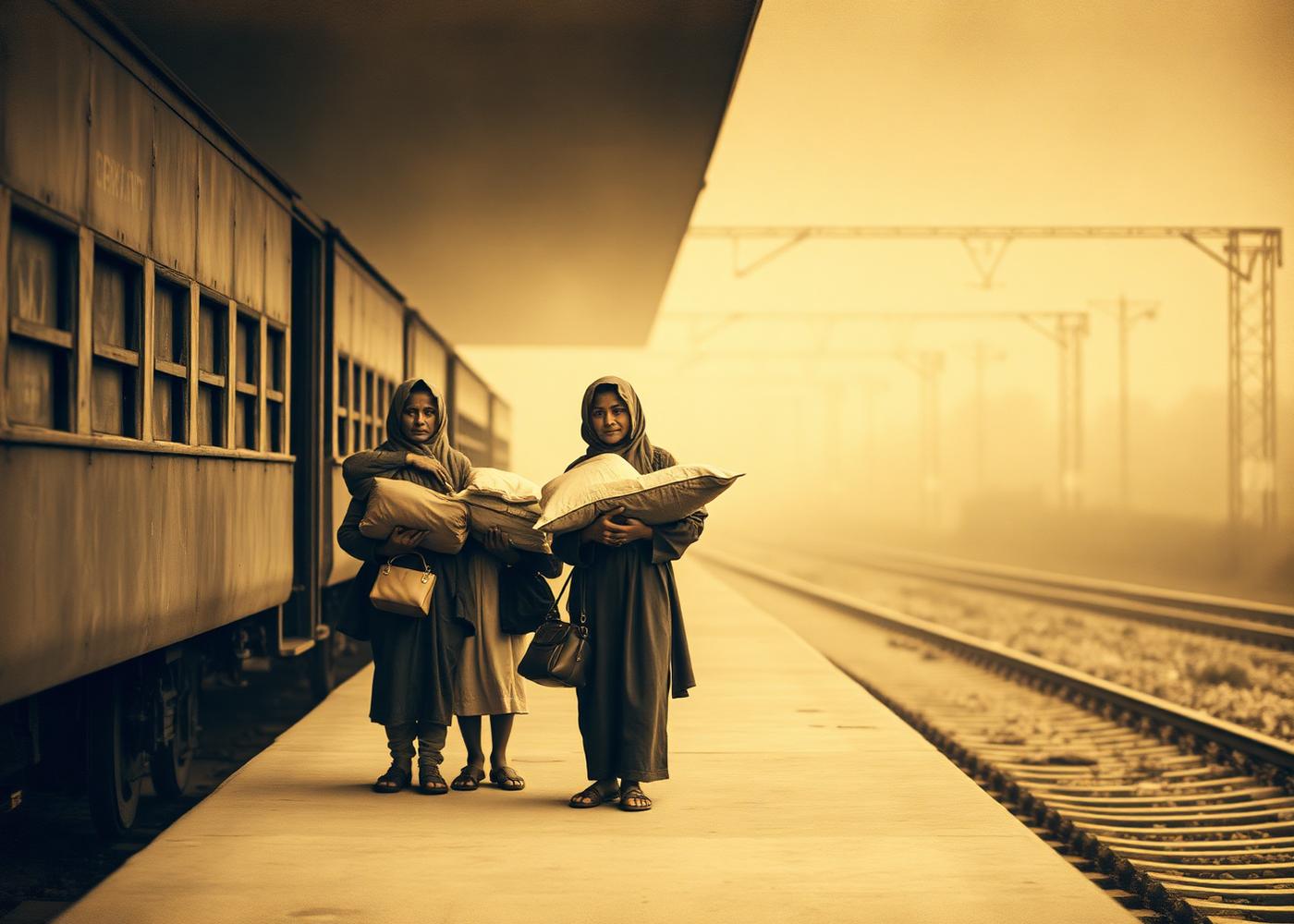
They left with what they could carry. They built what could not be taken.
By January 1948, communal violence in Karachi made it clear: Sindhi Hindus had no future in the new Pakistan. Families boarded trains, ships, and bullock carts toward India — a country most had never set foot in. They arrived as refugees in Mumbai, Ahmedabad, Pune, Indore, and a hastily-built settlement called Ulhasnagar.
Unlike other refugee communities, Sindhis received no contiguous territory in India. There was no "Sindhi state" to return to. The language lost its land. The culture lost its anchor. And yet, within a single generation, Sindhis became one of the most successful business communities in the world.
"We left Sindh, but Sindh never left us. It lived in our mothers' lullabies, in the ajrak draped over our shoulders, in the smell of sai bhaji on a Sunday morning."
What was lost. What was carried.
- — Ancestral homes, lands, and temples in Karachi, Hyderabad, Sukkur, Larkana
- — A territorial state where Sindhi was the language of public life
- — The shrines of Sufi saints that defined daily devotion
- — Generations of accumulated wealth, archives, and family histories
- — The Sindhi language, in two scripts and a thousand kitchens
- — Cheti Chand, the Sindhi new year, celebrated with new fervor in exile
- — Jhulelal — the river god who became the patron of a wandering people
- — A relentless entrepreneurial spirit forged in the absence of a homeland